

IMPORTANCE OF FORAGE
Horses are designed to graze almost continuously. Their digestive system, behaviour and respiratory health all depend on a steady intake of forage in a natural, head-down position.
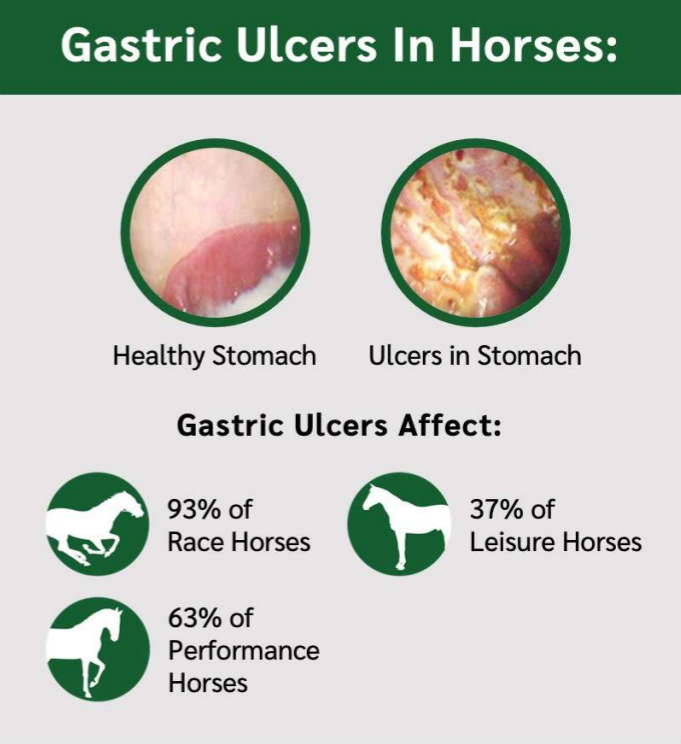
When this is disrupted—through restricted access, large meals or unnatural feeding positions—it can affect how the horse functions internally. Reduced chewing limits saliva production, leaving the stomach more exposed to acid, while long periods without forage increase the risk of gastric irritation.
Supporting consistent forage intake is essential to maintaining digestive balance, reducing stress and promoting overall health.
Lack of Forage
Increases the Risk of:

Stereotypical Behaviour

Colic

Gastric Ulcers
INTRODUCING THE HAYGAIN FORAGER SLOW FEEDER
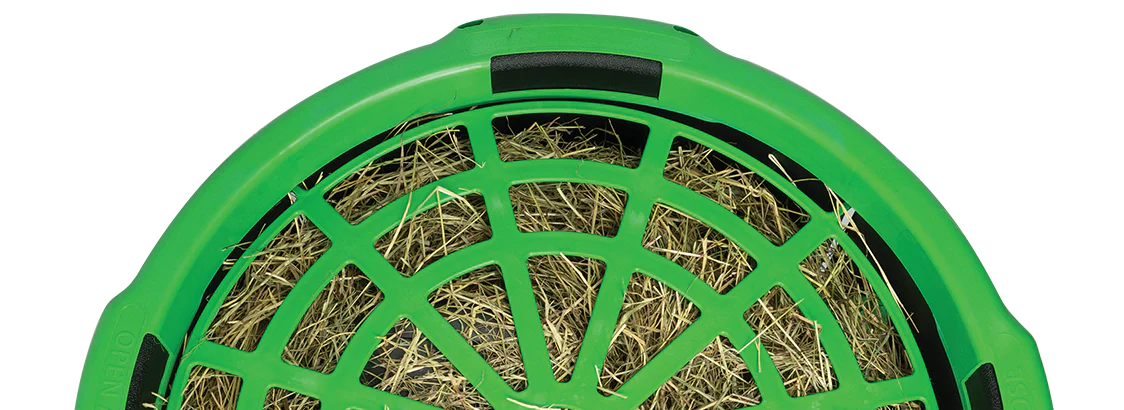
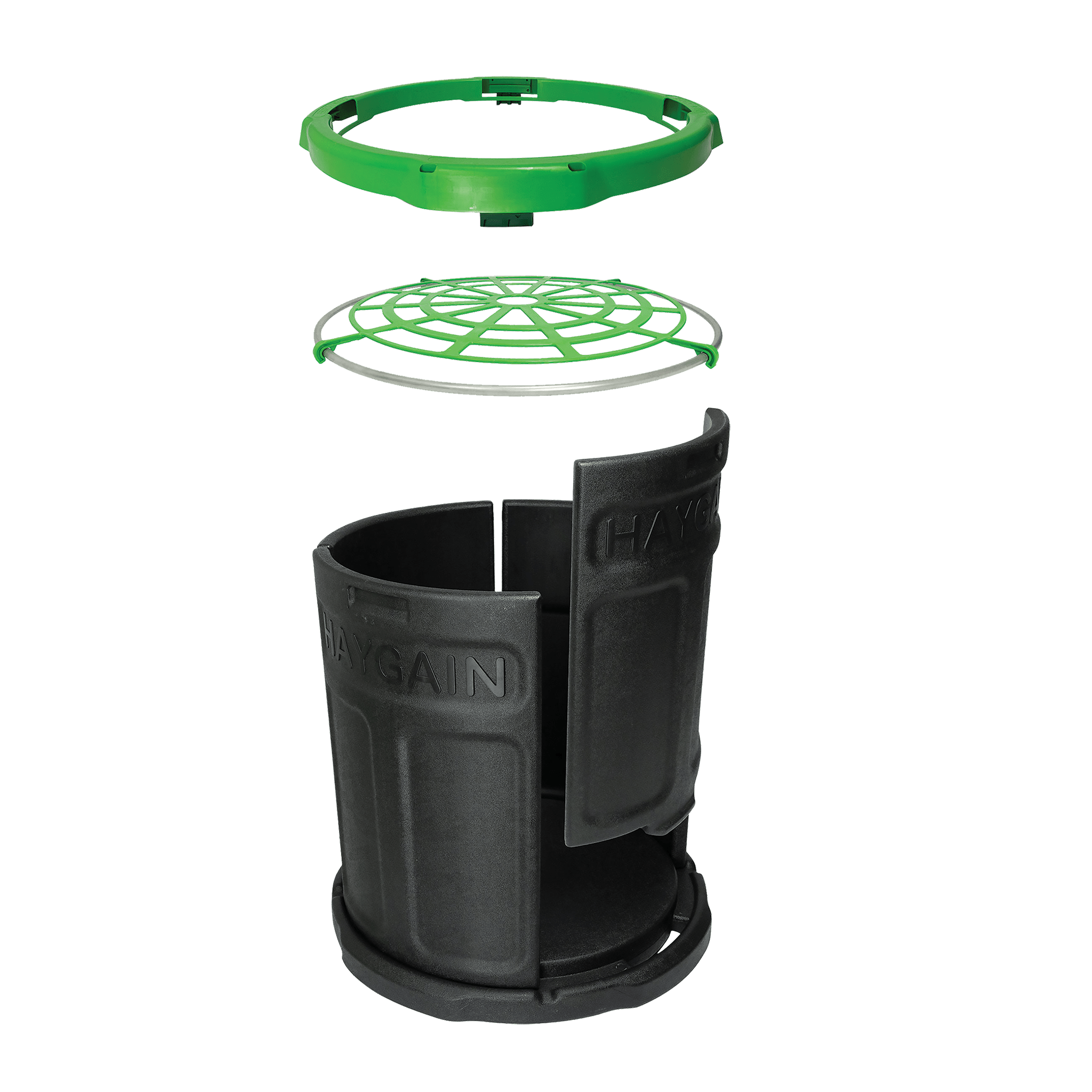
FORAGER SLOW FEEDER The Haygain Forager is designed to replicate natural grazing, allowing horses to eat in a head-down position while regulating intake—without causing frustration.
By slowing consumption and extending feeding time, it helps maintain consistent forage availability, supporting both physical and psychological wellbeing.
KEY BENEFITS Restores natural feeding behaviour - Encourages a head-down grazing position, supporting how horses are designed to eat.
Extends feeding time naturally - Regulates intake without restricting access—helping replicate 16–18 hour grazing patterns.
Supports digestive health - Smaller bites increase chewing and saliva production, helping buffer stomach acid.
Reduces stress and frustration - Unlike restrictive feeders, allows continuous access to forage for calmer behaviour.
Supports respiratory health - Lower feeding position aids natural airway drainage and reduces inhalation of irritants.
Improves musculoskeletal comfort - Natural posture reduces strain on joints, muscles and ligaments.
Reduces waste and contamination- Keeps forage contained, cleaner and off the stable floor.HOW THE FORAGER WORKS
The Haygain Forager uses a regulated feeding system designed to slow intake while allowing continuous access to forage.
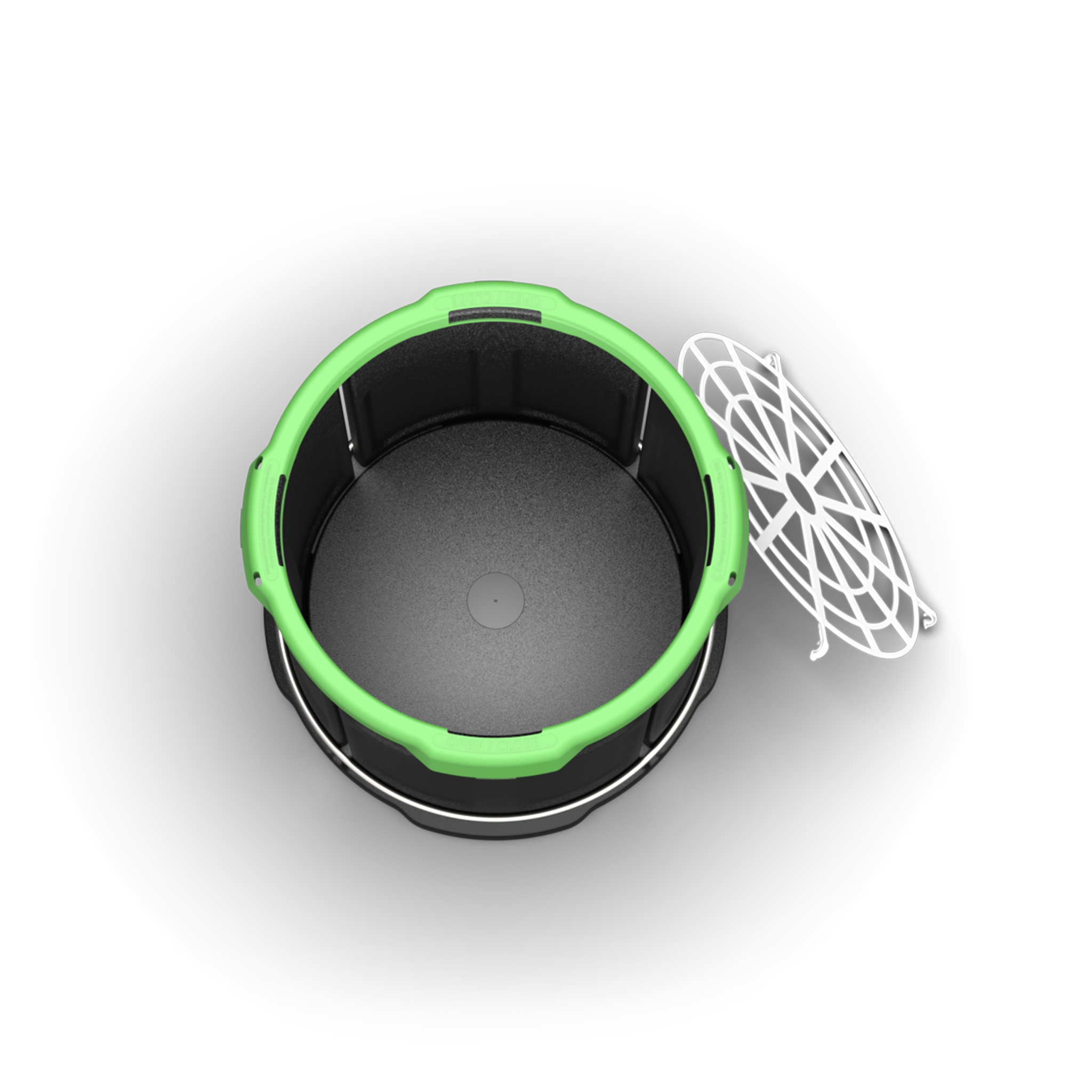
Hay is placed inside the feeder and covered by an interchangeable regulator plate, positioned between the horse and the forage. As the horse eats, it must forage and pull hay through the regulator openings, naturally slowing consumption and extending feeding time.
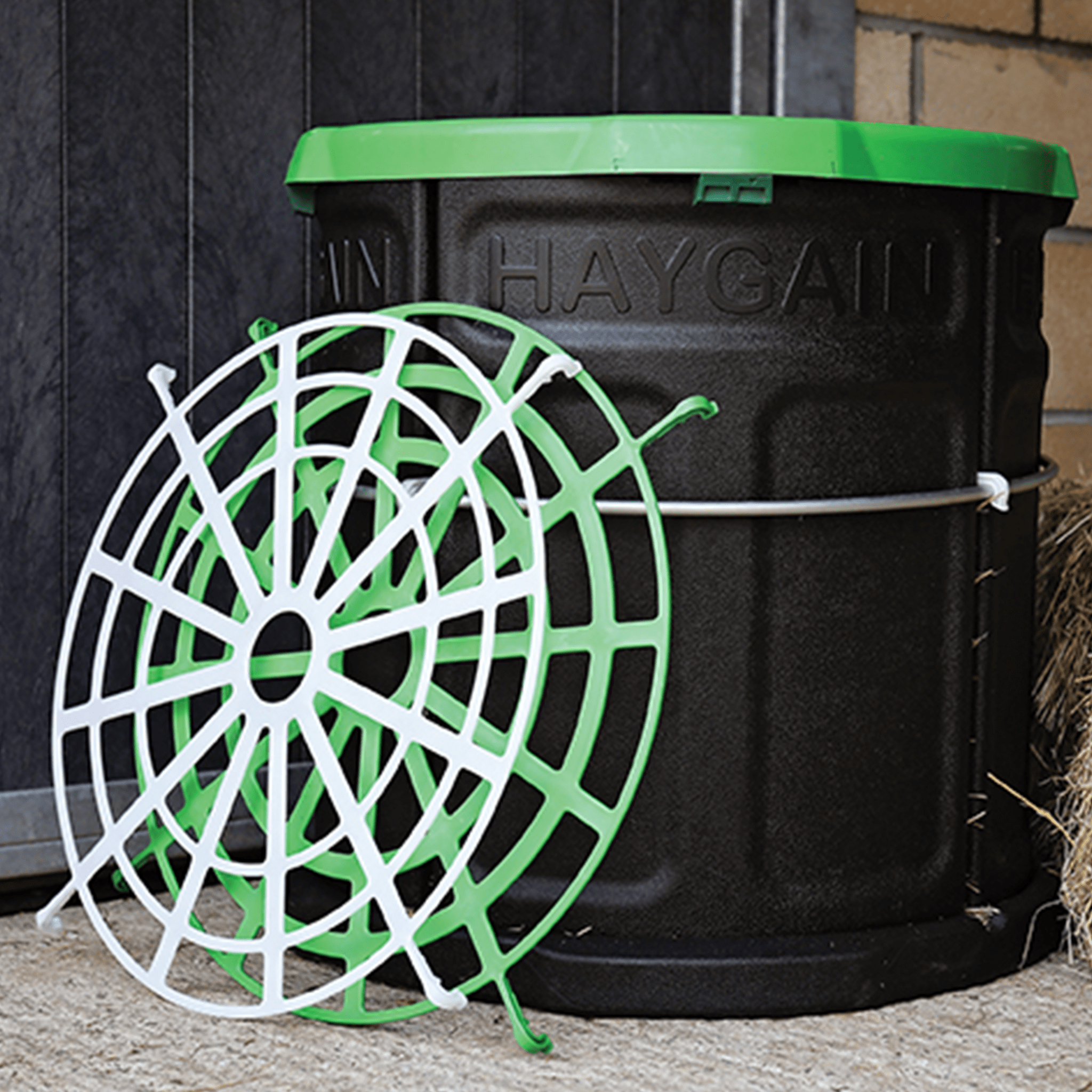
FORAGER REGULATORS The Forager features two interchangeable regulators, allowing you to tailor feeding speed to your horse’s needs:
Green Regulator (Standard) - Designed for most horses, providing controlled intake while maintaining steady, consistent feeding.
White Regulator (Easy) - Offers easier access to forage—ideal for younger, older or more sensitive horses, or when transitioning from unrestricted feeding.


Forager Research
Proven to Extend Feeding Time
Independent research comparing the Haygain Forager to haynets and loose hay demonstrates a significant increase in feeding duration—helping to replicate more natural grazing behaviour and support healthier, more consistent forage intake.
White (Easy) Regulator
- 61% slower intake vs loose hay
- 35% slower intake vs haynets
Green (Standard) Regulator
- Up to 106% slower intake vs loose hay
- 73% slower intake vs haynets
Extended feeding time supports more consistent forage intake, reducing large gaps between feeding and supporting digestive health. Crucially, this is achieved without increasing stress or frustration—research showed heart rate and blink rates remained within normal ranges, with no adverse behaviours observed, confirming a safe and welfare-friendly way to slow intake.


The Haygain Forager
- Regular price
-
£340.00 - Regular price
-
£0.00 - Sale price
-
£340.00





Support your horse’s physical and mental wellbeing with Haygain’s Hay Feeding solutions. Each product is designed to mimic natural grazing behaviour.


FAQs
Why is slow feeding important?
Horses are naturally trickle feeders. Slow, continuous access to forage supports digestion, helps prevent gastric ulcers, reduces stress, and encourages more natural behaviour in the stable.
Does The Forager really slow down eating? The holes look quite big.
The regulator of The Forager is less flexible than a haynet and therefore increases the difficulty of extracting hay through the holes. Testing was completed on several different variables, including loose hay and hay nets, and showed an average 61% and 35% respective reduction with the easy white regulator and 106% and 73% respective reduction with the standard green regulator.
How does the feeding rate of the Forager compare to a trickle/small-hole haynet, as opposed to a standard haynet?
Research by Ellis et al., (2015) looked at 4 haynets of varying sizes to establish the effect forage presentation had on intake behaviour. All smaller-holed haynets (25-30 mm) were equally successful in slightly slowing feed intake down with an increased intake time of around 5 minutes/kg compared with the ‘large-holed’ haynet (75 mm). Night observations showed no difference in the time to finish eating between the hay nets.
Ellis, A, D. Fell, M. Luck, K. Gill, L. Owen, H. Briars, H. Barfoot, C. Harris, P. (2015) Effect of forage presentation on feed intake behaviour in the stabled horse. Applied Animal Behaviour Science. 165. 88-94.
In-house testing of the Haygain Forager has shown a reduction in intake rate by 35% compared with the white regulator and 73% with the standard regulator when compared to a haynet. CCTV footage has shown horses eating into their ration into the early hours of the morning, with the added benefit of being able to eat in a natural feed position.
How long does a Forager Regulator last?
The longevity of the regulator will vary depending on use but most customers can expect their regulator to last 3 months or longer. The regulator is made from a flexible engineered food-grade plastic. This material is designed to be more durable than a haynet but more flexible than a metal grid (which has also been known to damage a horse’s teeth). The regulator will experience normal wear and tear from repeated use and will need to be replaced occasionally, but a worn regulator should not pose a safety or health hazard to your horse.
How durable is the Forager?
The Forager has been designed to withstand a normal amount of horse interaction, including pawing, kicking, and scratching. We have observed horses interacting well and only in a playful manner with The Forager and have not seen them get frustrated enough to cause damage.
How does the regulator stand up to horses’ teeth?
The regulator is made from a flexible engineered food-grade plastic. This material is designed to be more durable than a haynet but more flexible than a metal grid (which has also been known to damage a horse’s teeth). The regulator will experience normal wear and tear from repeated use and will need to be replaced occasionally, but a worn regulator should not pose a safety or health hazard to your horse.
How Is the regulator secured to prevent removal by the horse?
The regulators are secured using an EasyOn click and secure system, which allows you to easily fill The Forager while remaining secure when locked into place so that the horse is unable to remove them.
Is The Forager kick-proof?
The Forager has been designed to withstand a normal amount of horse interaction, including pawing, kicking, and scratching. We have observed horses interacting well and only in a playful manner with The Forager and have not seen them get frustrated enough to cause damage.
What is the purpose of the steel ring?
During the development of The Forager it became clear that regulator needed to be attached to the outside of the feeding area. The steel ring is what the regulator attaches to and what prevents the horse from tipping or by-passing the regulator. It is one of the components that makes The Forager unique and is an important part of its successful design.
What are the methods of securing The Forager? / Can The Forager be pushed over easily?
You may fill the base of the Forager with ~20 kg/45 lbs kiln-dried sand, or you may secure it to a metal tie-up ring on a wall on one or both sides using the tie up holes on the green top ring. The tie-up ring should be roughly the same height as the tie up holes.
I soak my hay - how does The Forager cope with wet hay (especially if you must weigh it down with sand)?
The sand is enclosed within the base; therefore, you can use soaked hay/dry hay/steamed hay/haylage in The Forager. The additional benefit of feeding soaked hay through The Forager is the drainage channels between the side walls.
What size pony can feed from The Forager?
The Forager can comfortably feed ponies as small as 10 hands.
Can the forager be used in the field?
Yes—The Forager is ideal for use in the field. It keeps forage contained, clean and off the ground, while the integrated drainage slats allow rainwater to escape—preventing soggy, contaminated hay.
