

Support your horse’s physical and mental wellbeing with Haygain’s Hay Feeding solutions. Each product is designed to mimic natural grazing behaviour.


THE IMPORTANCE OF FORAGE
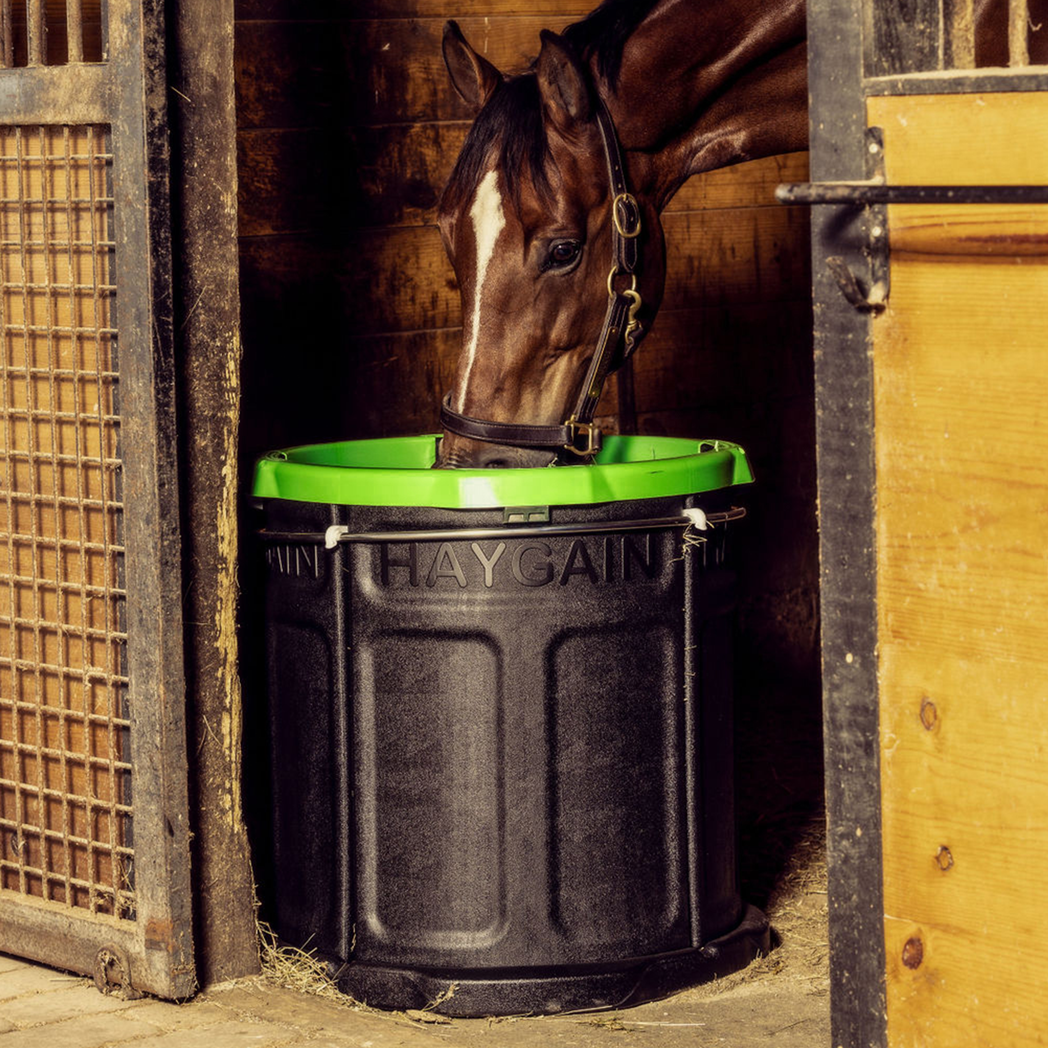
According to multiple studies, Equine Gastric Ulcer Syndrome affects up to 63% of performance horses and 93% of racehorses in training. A steady supply of forage supports sustained chewing. More chewing produces more saliva that protects the horse’s stomach lining from ulcer-causing gastric acid. Haygain Hay Feeders such as the Forager Slow Feeder and StableGraze Timed Feeder are designed to extend eating time and encourage slower, more natural intake—supporting consistent saliva production, reducing fasting periods and helping maintain digestive health.
THE HAYGAIN WAY
As part of Haygain’s management-led approach to long-term horse health, our feeding solutions work together to support natural foraging, digestive wellbeing and respiratory health.
From Haygain Steamed Hay to the Forager, StableGraze, DuraBar and DuraBale, each product plays a role in delivering clean, controlled, horse-friendly forage. Together, they help reduce contamination, slow intake and replicate how horses are designed to eat — gradually, from the ground and over time.
BENEFITS OF HAYGAIN HAY FEEDERS
DIGESTIVE HEALTH
WEIGHT MANAGEMENT
PHYSICAL & PSYCHOLOGICAL HEALTH
CLEAN FORAGE & LESS WASTE
• Haygain’s Hay Feeding solutions support slow, natural eating — helping horses consume forage over extended periods. Horses are designed to graze continuously, and their digestive systems rely on a steady trickle of fibre to function properly.
• In the wild, horses graze for up to 18 hours a day. It’s generally recommended that they don’t go longer than 4 hours without access to forage.
• By promoting longer chewing times and consistent forage intake, Haygain feeders encourage saliva production, which helps buffer the stomach and reduce the risk of ulcers and colic.
• Extended mealtimes are especially beneficial for horses on restricted diets. Long gaps without forage can trigger fat-storage responses and increase the risk of obesity and metabolic issues.
• Haygain’s slow feeding solutions help regulate intake, making it easier to manage weight while keeping horses mentally and physically satisfied. Visual cues and controlled feeding designs also support routine monitoring and portion control.
• Haygain feeders promote a natural, head-down eating position that supports respiratory drainage and helps maintain healthy alignment of the head, neck, and spine.
• Longer mealtimes make for happier horses that are less prone to boredom behaviours including cribbing, pawing and stall walking. And it reduces food scarcity stress.
• Haygain Hay Feeders are designed to keep forage contained and clean — helping to prevent trampling, contamination from bedding or manure, and unnecessary waste.


Compare products


Slow feeder
Timed release
Ground-level feeder
Round bale feeder
Greedy eaters & natural posture feeding
Horses needing controlled feeding routines
Unlimited access with natural posture feeding
Whole bale feeding for multiple horses
Slows intake, reduces boredom & reduces waste
Supports natural grazing patterns & consistent intake
Reduces waste, supports posture
Minimises waste, safe shared access
Stable or field
Stable
Stable
Field

FAQs
Why is slow feeding important?
Horses are naturally trickle feeders. Slow, continuous access to forage supports digestion, helps prevent gastric ulcers, reduces stress, and encourages more natural behaviour in the stable.
Does The Forager really slow down eating? The holes look quite big.
The regulator of The Forager is less flexible than a haynet and therefore increases the difficulty of extracting hay through the holes. Testing was completed on several different variables, including loose hay and hay nets, and showed an average 61% and 35% respective reduction with the easy white regulator and 106% and 73% respective reduction with the standard green regulator.
How does the feeding rate of the Forager compare to a trickle/small-hole haynet, as opposed to a standard haynet?
Research by Ellis et al., (2015) looked at 4 haynets of varying sizes to establish the effect forage presentation had on intake behaviour. All smaller-holed haynets (25-30 mm) were equally successful in slightly slowing feed intake down with an increased intake time of around 5 minutes/kg compared with the ‘large-holed’ haynet (75 mm). Night observations showed no difference in the time to finish eating between the hay nets.
Ellis, A, D. Fell, M. Luck, K. Gill, L. Owen, H. Briars, H. Barfoot, C. Harris, P. (2015) Effect of forage presentation on feed intake behaviour in the stabled horse. Applied Animal Behaviour Science. 165. 88-94.
In-house testing of the Haygain Forager has shown a reduction in intake rate by 35% compared with the white regulator and 73% with the standard regulator when compared to a haynet. CCTV footage has shown horses eating into their ration into the early hours of the morning, with the added benefit of being able to eat in a natural feed position.
How long does a Forager Regulator last?
The longevity of the regulator will vary depending on use but most customers can expect their regulator to last 3 months or longer. The regulator is made from a flexible engineered food-grade plastic. This material is designed to be more durable than a haynet but more flexible than a metal grid (which has also been known to damage a horse’s teeth). The regulator will experience normal wear and tear from repeated use and will need to be replaced occasionally, but a worn regulator should not pose a safety or health hazard to your horse.
How durable is the Forager?
The Forager has been designed to withstand a normal amount of horse interaction, including pawing, kicking, and scratching. We have observed horses interacting well and only in a playful manner with The Forager and have not seen them get frustrated enough to cause damage.
Are the haygain hay feeders compatible with all types of forage?
Yes — Haygain hay feeders are designed to work with all common forage types, including dry hay, haylage, steamed hay or soaked hay.
They are particularly effective when used alongside Haygain Steamed Hay, helping to maintain clean, dust-reduced forage while supporting a slower, more natural feeding pattern.
Whether feeding dry or treated forage, Haygain feeders help regulate intake, reduce waste, and encourage longer chewing times — supporting digestive health and overall wellbeing.
What is Haygain StableGraze?
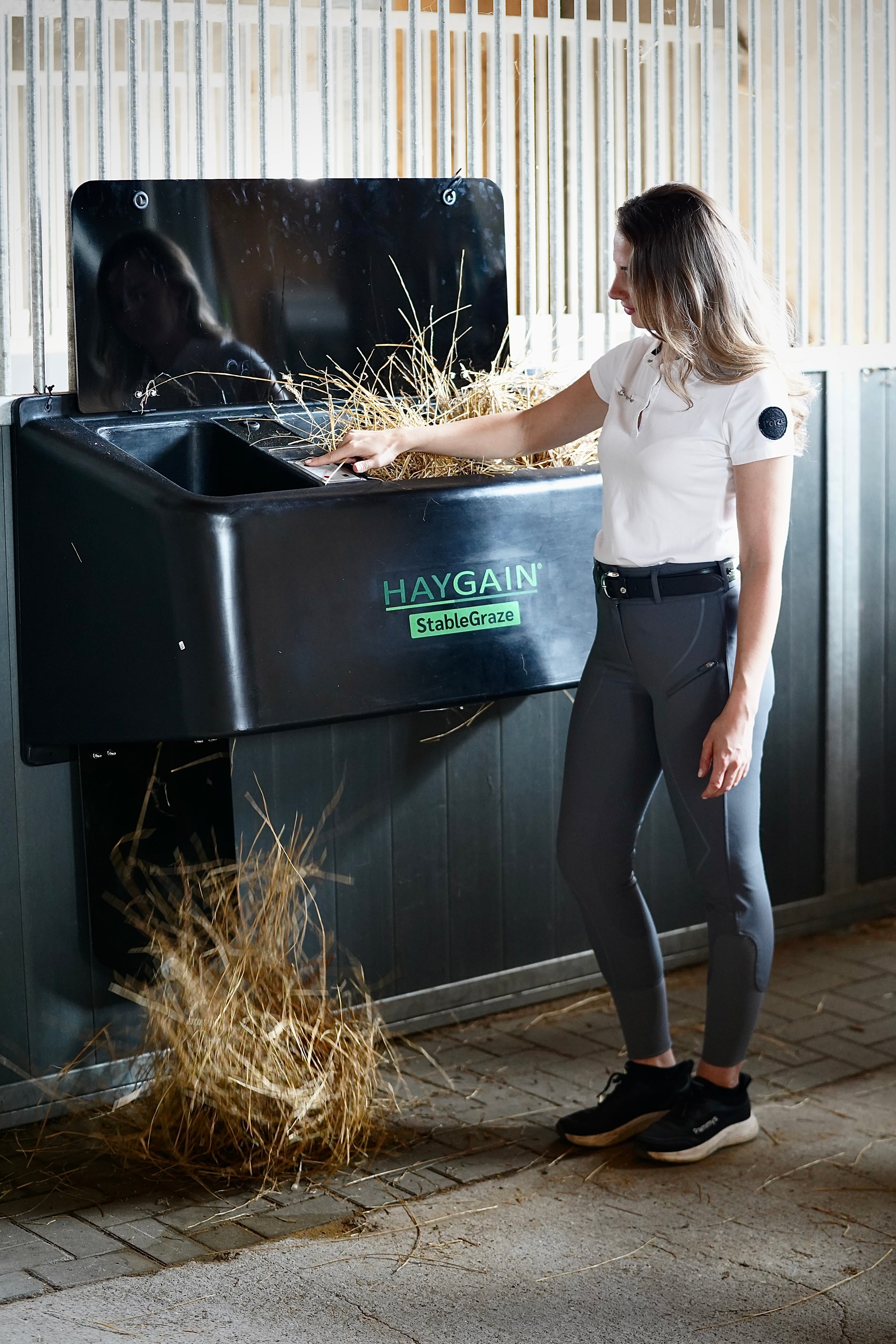
StableGraze is an automatic hay feeder designed to release hay in timed intervals, promoting natural, slow feeding behaviour for stabled horses.
Haygain StableGraze has three separate compartments, each holding up to 2kg of forage. You set the release times via the control panel, and each section drops open at the selected time to provide hay gradually throughout the day or night.
The unit runs on a rechargeable 12V battery. Battery life typically lasts around 8 weeks, depending on use.
What is the difference between the DuraBar and the DuraBale?
The DuraBar is a corner feeder designed for use in stables. The DuraBale is a heavy-duty ground feeder ideal for group feeding in the field or paddock.
Is the Haygain DuraBale safe for horses?
Yes. It’s made from shatterproof, UV-stable plastic with smooth, rounded edges — much safer than metal feeders, with no sharp points to cause injury.
How easy is the Haygain Durabale to set up and move?
Very easy! The DuraBale comes in three lightweight parts (each weighing 26 kg) that can be assembled in just a few minutes — no tools or expertise required.
The DuraBale is extremely tough and built to withstand all weather conditions. It’s UV-resistant and designed for long-term use in the field.
